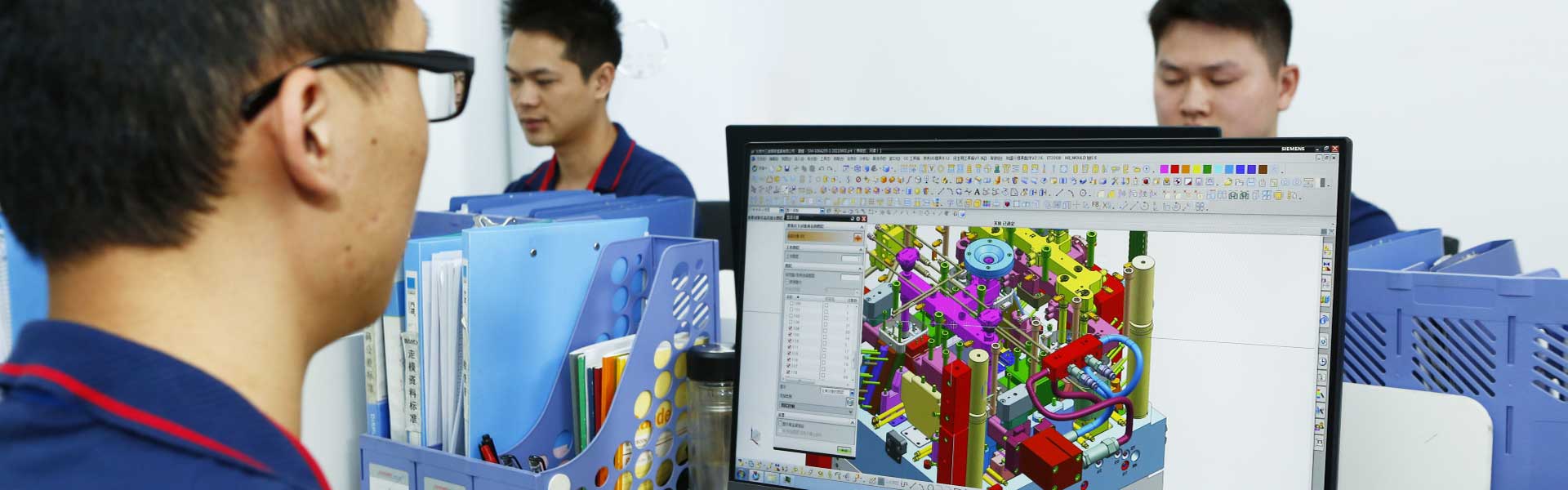
What is 2K Molding?
2K molding, or two-shot molding, is an injection molding process where two different materials or colors are molded together in a single cycle. This process is commonly used for housing components in electronics, automotive, medical devices, and consumer products to create seamless, durable, and aesthetically pleasing parts.

Key Steps in Designing 2K Housing Plastic Molds
1. Define Requirements
● Part Design: Understand the geometry, size, and functional requirements of the housing.
● Material Selection: Choose compatible materials for the two shots (e.g., rigid plastic for the main body and soft-touch TPE for grips).
● Tolerances: Define dimensional and aesthetic tolerances.
● Production Volume: Determine the expected production volume to guide mold design and material choices.
2. Part Design Considerations
● Wall Thickness: Ensure uniform wall thickness to avoid warping or sink marks.
● Overmolding Areas: Design features like undercuts, ribs, or grooves to ensure proper adhesion between the two materials.
● Draft Angles: Include draft angles (1-2°) for easy ejection.
● Gate Locations: Plan gate locations to minimize visible marks and ensure proper material flow.
3. Material Compatibility
● Chemical Bonding: Ensure the two materials can bond chemically or mechanically.
● Thermal Properties: Match melting temperatures and cooling rates to avoid defects.
● Shrinkage Rates: Account for differences in shrinkage rates between materials.
4. Mold Design
● Mold Type: Use a rotary or shuttle mold for 2K molding.
● Cavity and Core: Design separate cavities for each shot, ensuring precise alignment.
● Cooling System: Optimize cooling channels to control cycle times and prevent warping.
● Ejection System: Design ejector pins or plates that won’t damage the overmolded material.
● Venting: Include vents to avoid air traps and burn marks.
5. Injection Molding Machine
● Two Injection Units: Ensure the machine has two barrels for simultaneous or sequential injection.
● Clamping Force: Calculate the required clamping force based on part size and material.
● Cycle Time Optimization: Minimize cycle times while maintaining part quality.
6. Prototyping and Testing
● Prototype Molds: Use soft tooling or 3D-printed molds for initial testing.
● Material Testing: Verify adhesion, strength, and durability.
● Dimensional Inspection: Check for accuracy and consistency.
7. Production
● Process Optimization: Fine-tune temperature, pressure, and injection speed.
● Quality Control: Implement rigorous inspection processes to ensure consistency.
● Maintenance: Regularly maintain molds to prevent wear and defects.
Common Challenges in 2K Mold Design
● Material Adhesion: Poor bonding between materials can lead to part failure.
● Warping: Uneven cooling or shrinkage can cause warping.
● Complexity: Designing molds for intricate geometries can be challenging.
● Cost: 2K molds are more expensive due to their complexity.
Best Practices
● Collaborate with Material Suppliers: Work closely with material suppliers to ensure compatibility.
● Simulate Mold Flow: Use CAE software (e.g., Moldflow) to simulate material flow and identify potential issues.
● Iterative Design: Test and refine designs through multiple iterations.
● Work with Experienced Mold Makers: Partner with mold makers who have expertise in 2K molding.
Applications of 2K Housing Molds
● Electronics: Smartphone cases, remote controls, and connectors.
● Automotive: Buttons, grips, and seals.
● Medical Devices: Ergonomic handles and seals.
● Consumer Products: Toothbrushes, tool handles, and kitchenware.
By following this guide, you can design efficient and high-quality 2K housing plastic molds that meet your product requirements. Always prioritize collaboration, testing, and optimization to ensure success.

 +86 13421913167
 E-mail
